When Self-Sabotage Is the Thing Standing in Your Way
There is a quiet truth many of us eventually face.
Sometimes the biggest obstacle to our growth is not our circumstances.
It is us.
That can feel like a hard realization. Most women who love Jesus want to live faithfully, serve others well, and steward their lives wisely. Yet even with the best intentions, we can unintentionally get in our own way.
Self-sabotage rarely looks dramatic. It is subtle. It shows up in everyday habits and reactions that slowly limit our progress.
Some of the most common examples include:
- Rejecting praise and compliments
- Not asking for help
- Refusing to launch something unless it can be perfect
- Procrastinating on important projects
- Putting everyone else’s needs ahead of your own
- Constantly criticizing yourself in your head or aloud
Many women recognize themselves somewhere on that list.
None of these behaviors mean you are weak or failing. They are simply patterns that develop when we are trying to protect ourselves, manage expectations, or keep up with the many responsibilities we carry.
But over time, these patterns can quietly become a ceiling on our growth.
You may have a calling on your life.
You may have goals you care deeply about.
You may want to show up for your family, your work, and your faith with energy and clarity.
Yet without realizing it, self-sabotage can slowly drain your momentum.
Why Structure Helps Break the Cycle
One of the most effective ways to interrupt self-sabotage is to create gentle structure in your life.
Structure helps you move forward even when your emotions, doubts, or perfectionism try to stall you. It gives your mind something to follow when overwhelm starts whispering that you cannot do it.
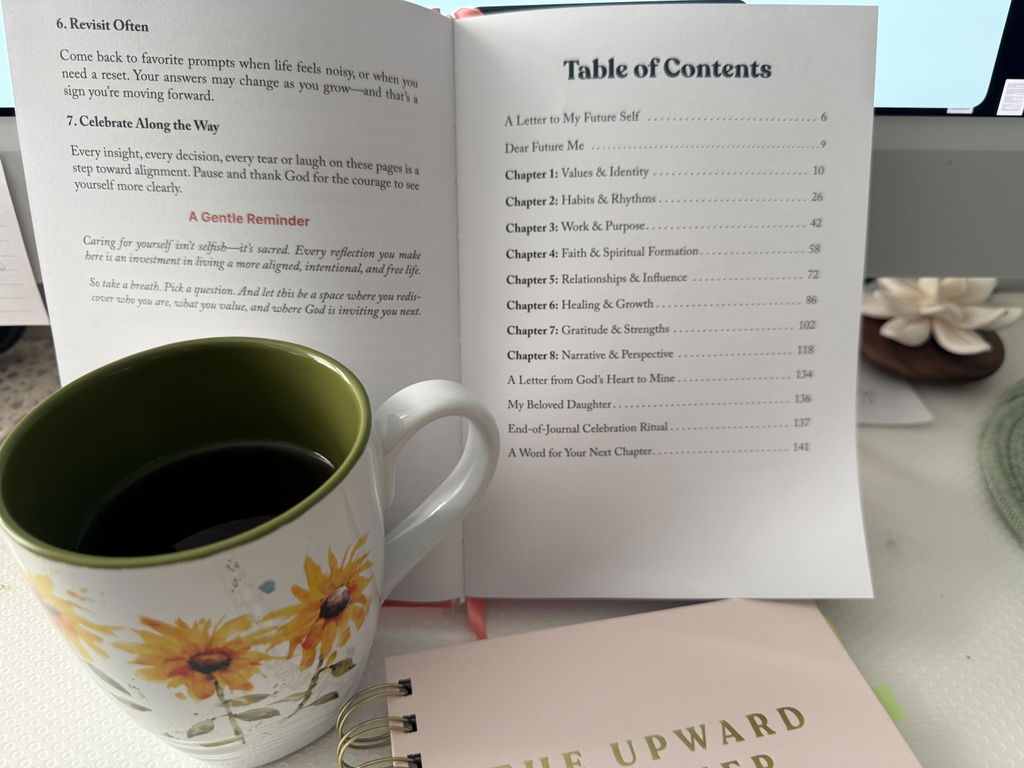
That is exactly why I created the Upward Planner.
When we designed this planner, I did not simply guess what women needed. I asked dozens of women between the ages of 25 and 79 what actually helped them move toward their goals without burning out.
Women in different seasons of life shared remarkably similar struggles:
- feeling overwhelmed
- losing focus on what matters most
- caring for everyone else before themselves
- wanting to grow but feeling stuck
Their feedback shaped every page of this planner.
A Planner Designed to Support You, Not Pressure You
Many planners unintentionally increase pressure. They are built around productivity at all costs.
The Upward Planner was designed differently.
- Clarify what truly matters in this season of life
- Identify meaningful priorities instead of endless tasks
- Take consistent steps toward your goals
- Reflect on progress without harsh self-criticism
- Stay connected to your faith while planning your week
Instead of fueling perfectionism, it encourages progress. Instead of adding pressure, it restores perspective. And perhaps most importantly, it gently helps you notice when you might be getting in your own way.
If You Feel Overwhelmed Sometimes
If you are a woman who loves Jesus and occasionally feels overwhelmed by everything life asks of you, you are not alone.
You do not need more pressure. You do not need to be harder on yourself. You simply need tools that support your growth while protecting your peace.
That is exactly what the Upward Planner was created to do.
Because sometimes the most powerful thing we can do is stop fighting ourselves and start building systems that help us flourish.
- Dana
Frequently Asked Questions
What is self-sabotage?
Self-sabotage happens when our habits, thoughts, or behaviors unintentionally prevent us from reaching our goals. It often shows up through perfectionism, procrastination, negative self-talk, or avoiding help from others.
Why do people sabotage their own progress?
Most self-sabotage develops as a way to protect ourselves from failure, rejection, or disappointment. Over time these protective habits can quietly limit growth, even when we deeply want to move forward.
How can a planner help stop self-sabotage?
A thoughtful planner creates structure and clarity. When priorities are clear and steps are small and manageable, it becomes easier to move forward instead of procrastinating or waiting for perfection.
What makes the Upward Planner different from other planners?
The Upward Planner was designed with input from women ages 25 to 79 who wanted a planning tool that supports meaningful goals without burnout. It combines thoughtful planning, reflection, and faith-centered perspective so progress feels sustainable instead of overwhelming.
Who is the Upward Planner designed for?
The Upward Planner was created for women who love Jesus and want to pursue meaningful goals while protecting their peace. It is especially helpful for women who feel overwhelmed, carry many responsibilities, and want a calmer way to plan their lives.